One Block Can Change Everything: How Micro-Location Shapes Chicago Home Values
After more than four decades selling real estate in Chicago, I have learned that buyers often begin their search by choosing a neighborhood, but the value and experience of a home is often determined one block at a time, or even at a smaller scale.
Two properties can share the same ZIP code, neighborhood name, and even the same cross streets, yet offer very different experiences. One may sit on a quiet, tree-lined street where neighbors linger outside and natural light pours through the windows. The other may be only a few hundred feet away but face heavier traffic, an active alley, an elevated train, a commercial loading zone, or future construction.
That difference is what I call ‘micro-location’.
A Real-Life Example
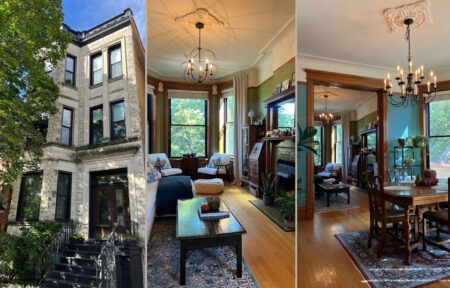
One sale that stays with me is a remarkable custom-built home at 1257 W Wrightwood Avenue; one of my favorite’s of the many homes I have had the pleasure of representing. The home is beautifully designed, built on an unusually wide lot, situated on a pretty, tree lined street, and filled with thoughtful architectural details and natural light. On paper, it offered many of the qualities luxury buyers want.
The challenge was not the home. It was attracting buyers to a section of Lincoln Park that many considered slightly off the beaten path compared to Lincoln Park’s traditionally sought-after streets.
We focused first on how to present the home’s significant special features – 45’ wide lot, gorgeous, lush landscape, 14’ ceiling height, loads of natural light, attached, heated oversized garage with a connected breezeway. We then identified potential buyers that would appreciate these special details. We had to understand exactly which buyers would appreciate both the property and its particular location – and present the home accordingly. Over the course of the listing cycle we came close, with two buyers that loved the house. And then magic happened and we found ‘the one’! We ultimately sold the home to a family who immediately understood what made the home special. And as often happens, this lovely pocket of Lincoln Park exploded.
The lesson was not that location could simply be “overcome.” It was that the home’s precise location shaped its buyer pool, our marketing strategy, and how to present the home and it’s value proposition to the market.
What Does Microlocation Include?
Microlocation describes the immediate surroundings of a property, not simply its neighborhood.
In Chicago, that can include:
- Whether the home sits on a quiet residential street or a busy through-route
- Its position on the block and proximity to an alley, fire hydrant, train, school, park, restaurant, or commercial property.
- The direction the home faces and how surrounding buildings affect its natural light.
- Whether views are protected or could be obstructed by future development.
- Parking patterns, deliveries, traffic, and noise at different times of the day and night.
- School-attendance boundaries, zoning, and nearby development plans.
- For condos, the unit’s position within the building: front or rear, floor level, exposure, elevator location if an elevator building.
None of these details necessarily makes a home “good” or “bad.” Their importance depends on the buyer. Someone may happily trade a quieter street for a two-minute walk to the train. Another buyer may prefer a slightly smaller home if it offers morning light, treetop views, and a peaceful outdoor space.
The important thing is understanding the trade-offs for the particular buyer before making a purchase.
Why Micro-Location Matters to Homebuyers
Finishes can be changed. A kitchen can be renovated, walls can be painted, and storage can often be improved. A home’s position on its block cannot be moved.
Micro-location affects not only daily life but also future resale. The detail(s) that do not bother you today may narrow the buyer pool when it is time to sell. Conversely, a home with an ordinary interior but an exceptional position may offer an opportunity that is easy to overlook when scrolling through listing photos.
Online searches and comparable-sales reports are useful, but they often flatten these distinctions. A price-per-square-foot comparison cannot fully explain why buyers consistently prefer one side of a street, why the top floor of one building commands a premium, or why two similar homes only a block apart can attract very different levels of interest.
That understanding comes from seeing properties in person, observing how buyers respond over time, and knowing which details tend to matter when the home returns to the market.
I encourage buyers to be thoughtful beyond the front door. Visit the home’s location and surrounding area at different times of the day. Listen with the windows open. Notice the sunlight, traffic, surrounding buildings, and the walk to the places that will be part of everyday life. A beautiful home should work not only in photographs, but on an ordinary Tuesday morning.
If you are considering buying and trying to understand why two seemingly similar properties feel so different, please reach out. I’m always happy to share what I know and help you take a closer look!